Proud Nana Police Officer Design Review
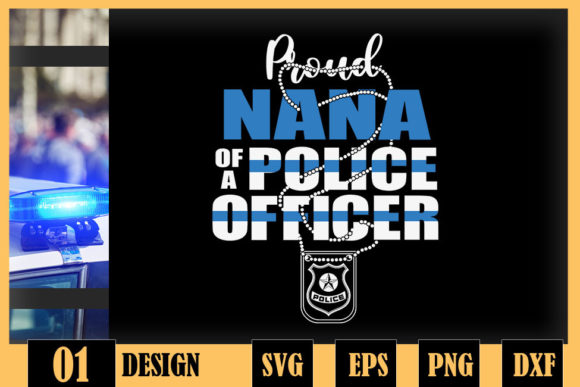
As a designer who spends more time at the hoop than away from it, I approach every new machine embroidery design with a critical eye. It is not just about whether the image looks cute on a screen; it is about how that embroidery file translates into thread, tension, and texture on actual fabric. Recently, I evaluated the Proud Nana of a Police Officer Thin Blue graphic to determine its viability for real-world projects. This isn't a generic clipart review; this is an assessment of how this specific asset holds up when you are trying to build a reputation for quality in your craft business.
The first impression of the Proud Nana of a Police Officer Thin Blue layout is one of quiet strength and familial pride. The visual personality leans heavily into the "Thin Blue Line" aesthetic, which carries significant emotional weight for law enforcement families. For an Etsy seller or boutique owner, this mood is crucial. You are not just selling a picture; you are selling a sentiment of support and safety. The design elements appear structured to honor that seriousness while maintaining the warmth associated with a grandmother's love. When I visualize this as a finished product, it feels most at home on items meant for display or comfortable wear, rather than high-performance athletic gear.
Real-World Application: The Custom Tote Scenario
To truly test the potential of this graphic, I imagined a specific client request: a custom tote bag design for a police appreciation event. The client wanted something durable yet personal for the grandmothers of the officers on the force. Using the Proud Nana of a Police Officer Thin Blue concept here makes immediate sense. A canvas tote provides a stable, woven surface that handles detail well. Unlike stretchy knits, the tight weave of a tote bag allows the lines of the graphic to remain crisp.
If you were to digitize this graphic yourself or use a pre-made digital embroidery file based on this theme, the placement would likely be central on the bag panel. The "Thin Blue" element suggests a specific color palette—likely black, white, and a vibrant royal blue. In a real stitching scenario, ensuring that the blue thread has enough sheen to stand out against a dark navy or black bag is vital. If the contrast is off, the "Thin Blue Line" effect gets lost, and the message fails. For a handmade product like this, the visual clarity defines the value. A customer paying for a personalized item needs to see the distinction immediately.
Versatility Across Apparel and Home Decor
Beyond tote bags, this design concept translates effectively to sweatshirt embroidery. A heather grey crewneck serves as an excellent neutral background, allowing the blue and black elements to pop without looking too harsh. For baby embroidery projects, such as a onesie for a new grandchild of an officer, the scale of the design becomes the primary concern. You must ensure the details are not so fine that they disappear on a small garment or become scratchy against sensitive skin. Reducing the size often requires simplifying the stitch density to prevent the design from becoming a solid puckered blob.
I also see strong potential for this graphic in home decor, specifically pillow covers or kitchen towels. A decorative pillow in a living room can serve as a subtle nod to family pride. However, when moving to textured fabrics like waffle-weave towels, the integrity of the lines in the Proud Nana of a Police Officer Thin Blue design must be robust. Fine running stitch details might get lost in the texture, so a design relying more on fill stitch or bold satin stitch outlines would perform better. This is where your judgment as a creator comes in; you must match the complexity of the graphic to the roughness of the material.
Technical Considerations and Fabric Challenges
While the theme is powerful, the execution requires careful planning. One area where designers often stumble with themed graphics is curved surfaces. If you plan to put this on a cap, be warned: the front panel of a hat is unforgiving. Complex curves or tiny text elements within the Proud Nana of a Police Officer Thin Blue layout can distort easily on a curved hoop size. Unless the file is specifically digitized for caps, I would advise sticking to flat garments or accessories.
Fabric choice is another make-or-break factor. Dark fabrics are traditional for law enforcement themes, but stitching light threads on dark material requires a dense underlay to prevent the fabric from showing through. Conversely, if you are using a light fabric, ensure your stabilizer choice is heavy enough to support the weight of the thread, especially if the design uses a lot of satin stitch which can pull and pucker lightweight cottons. Always test on scrap fabric first. There is no substitute for seeing how the thread colors interact with your specific material batch.
Enhancing Brand Value and Customer Trust
For commercial embroidery professionals, the quality of the final stitch directly impacts brand consistency. If you are selling these as small shop products, a sloppy finish on a meaningful design like this can damage your reputation. The "Thin Blue Line" community is tight-knit; they notice when corners are cut. A clean, professional application of the Proud Nana of a Police Officer Thin Blue motif builds trust. It tells the customer that you respect the symbol enough to execute it perfectly.
This attention to detail also enhances the "giftability" of the item. Whether it is a holiday embroidery gift for Christmas or a graduation present for the academy, the recipient wants something that feels premium. Using high-quality threads and ensuring the back of the embroidery is as neat as the front (minimal jump stitches, proper trimming) elevates the perceived value. It transforms a simple graphic into a cherished keepsake.
Final Designer Notes and Best Practices
Before committing to a production run, there are several practical steps you should take. First, verify the licensing terms. Since the source material mentions compatibility with software like Cricut Design Space, Silhouette Studio, and Adobe Illustrator, it is primarily marketed as a graphic. If you intend to sell physical custom apparel, ensure you have the right to use the image commercially. If you are converting this graphic into an applique design or a standard stitch file, confirm that the original creator permits derivative works.
Secondly, check the scalability. Open the file in your preferred software and zoom in to 400%. Are the lines smooth? Is the text legible? If the Proud Nana of a Police Officer Thin Blue graphic relies on very thin lines, it may not survive the transition to thread at smaller sizes. Consider creating a black-and-white mockup to test contrast before you ever thread the needle. Finally, remember that context matters. This design shines when it honors a specific relationship. Treat it with the care it deserves, and it will become a staple in your catalog of meaningful, high-value items.
In conclusion, the Proud Nana of a Police Officer Thin Blue theme offers a compelling opportunity for creators in the Crafts and Graphics sectors. By focusing on fabric compatibility, stitch quality, and respectful presentation, you can turn this digital asset into a tangible expression of pride that resonates deeply with your customers.